Beyond the database: why your CRM should become a system of action



Beyond the database: why your CRM should become a system of action
CRM, that famous acronym that often makes the sales team cringe. Too often, it is perceived as a manhandled tool, an intrusive system that interferes with the natural workflow, or a cumbersome structure that seems to exist only to justify management reports. Let's be honest, I would be the first to raise my hand to say that I hate entering data into a system simply for the sake of capturing information or to feed dashboards that don't reflect the reality on the ground.
However, it is time to stop looking at CRM from this restrictive angle. The truth is that CRM is often poorly sold or poorly introduced within organizations. Its adoption and success start from leadership. It is necessary to understand and communicate the “why”: why this system is a fundamental organizational tool and above all, how it becomes a real way to take action more effectively on a daily basis.
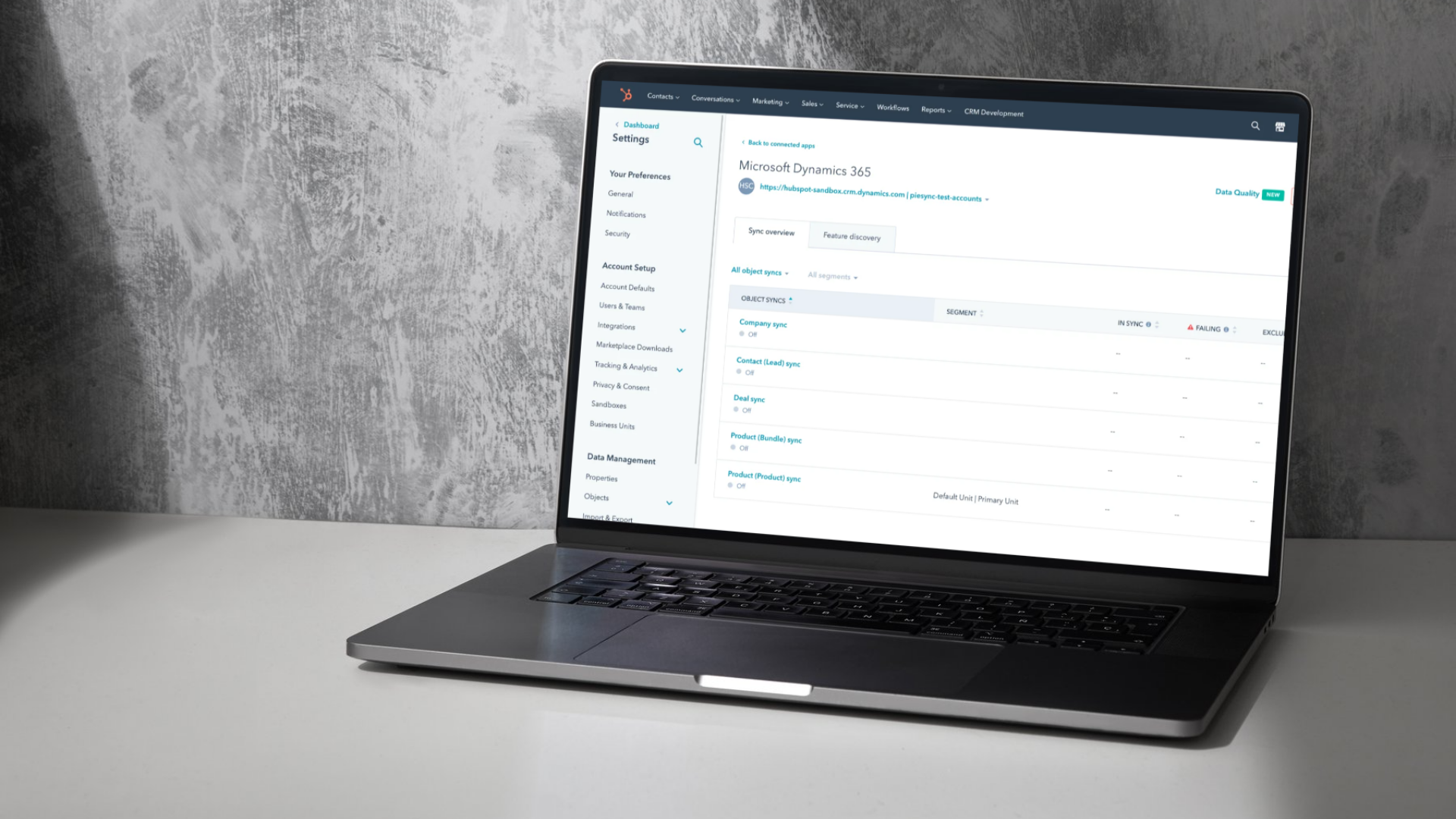
Basically, a HubSpot CRM is a database that brings together contacts, companies and current opportunities in your sales pipeline. That is the starting point. But today, with the integration of artificial intelligence, predictive agents, and automation, we are elsewhere. Before we even dive into the promises of AI, let's take a step back to capitalize on the foundations. Why is this system significant and how can it be better perceived internally?
Data Architecture: The Foundation for Your Success
This is where the expertise of a HubSpot partner like Lakhos makes perfect sense. A solid foundation cannot be improvised. It is based on a deep understanding of the company's business model and sales process. Without prior CRM analysis, you're building on quicksand.
Technological architecture must answer concrete questions that dictate the future effectiveness of your operations. Are several contacts associated with a single company or do you manage multi-company relationships? When an opportunity (a Deal) is open, should it be linked to a single decision-maker or to a group of influencers? Is it possible to have several active opportunities under the same company simultaneously? And above all, how are sales activities grouped together? Should they appear under the contact, the company, the opportunity, or all three?
These questions are critical to building a structure that serves the user rather than locking them up. By defining these rules from the start, we ensure that the data is clean, segmentable and above all useful for the end user.
.png)
Simplifying Complexity: Mapping the Sales Process
Through this architecture, it is imperative to standardize the sales process to make it as smooth as possible. We know that every business likes exceptions, but the reality is cruel: for a system to be effective, you have to limit specific cases and aim for simplicity.
The concept of “Lead-to-Cash” must be at the heart of the thinking. How does the information flow from the first interaction to the payment? The real challenge is the ability to make complexity simple. For example, do you sell directly, through a network of distributors, or both? Do you use manufacturing agents?
Once the opportunity is qualified, what are the specific stages of the pipeline? Is the tender generated in a Word template, extracted from the ERP, produced via a CPQ tool or created directly in the CRM? What is the current monitoring process and how can it be optimized? By answering these questions, we simplify the daily life of the sales team, ensure consistency in data, and ultimately, we create an environment where people enjoy using their work tool.
From the storage system to the action system
Once the CRM implementation project is based on solid and simplified foundations, CRM ceases to be passive and becomes active. This is where it is transformed into an action system. A well-configured CRM makes it possible to trigger concrete actions without constant manual effort.
Imagine automating follow-up tasks that are activated intelligently. You can create segmented lists based on specific behaviors. For example, if no interaction has taken place with a strategic customer for more than fifteen days, the system can trigger an alert or an automated reminder. We can also talk about specific categorization to allow marketing to send targeted and relevant information, thus transforming a simple contact sheet into a revenue opportunity.
In addition, a well-controlled CRM offers analytical reports with high added value. It becomes possible to precisely identify where the bottleneck is in your sales cycle. Is it a speed issue? Is it linked to a specific type of product? Is it an internal error that we can optimize, a seasonal factor, or a recurring price objection? This information makes it possible to manage the business with facts rather than with impressions.
The organizational aspect and the RevOps culture
The success of a CRM goes beyond technology; it's a question of organizational culture. Yannick Beaulé, from EPIQ Machinery, brilliantly emphasized this during a recent podcast that we produced together. In discussing his vision of RevOps (Revenue Operations), Yannick explains that CRM is primarily an internal communication tool.
Sharing information in real time makes it possible to sell better, to be more proactive and to achieve greater efficiency. The CRM becomes the organization's central nervous system. When CRM and ERP integrations are fluid, information no longer remains isolated in a department. It circulates, it informs and it propels growth.
In conclusion, CRM is not an end in itself, it is a means. By focusing on a well-thought-out data architecture, a process mapping rigorous and an action-oriented vision, you transform a tool perceived as cumbersome into an indispensable growth driver. Chez Lakhos, our role as a HubSpot agency is to support you in this metamorphosis so that your technology finally lives up to your ambitions.
Frequently Asked Questions (FAQ)
Why isn't my sales team using the current CRM?
Sales team membership often fails because the system is perceived as an administrative chore with no added value for them. To correct this, CRM must be configured to simplify their daily tasks, in particular through automation and an intuitive data architecture that reflects their reality on the ground.
What is the difference between a database and an action system?
A database simply stores information statically. An action system, such as a HubSpot CRM Well configured, uses this data to trigger automations, generate intelligent reminders, segment audiences, and provide analytics that dictate strategic next steps.
Why is it important to integrate CRM with my ERP?
CRM and ERP integrations help eliminate information silos between sales, operations, and finance. This ensures that the sales team has real data on inventory, pricing, and billing history, making the “Lead-to-Cash” process much smoother and error-free.
What does the RevOps approach bring to my business?
RevOps aims to align sales, marketing, and customer service teams around a common data structure and processes. This allows for better visibility across the entire customer lifecycle and optimizes revenue generation by eliminating internal friction.