HubSpot vs Odoo: choosing the best foundation for your growth



HubSpot vs Odoo: choosing the best foundation for your growth
In the current technological landscape in Quebec, SMEs and mid-sized businesses (ETI) face a recurring dilemma during their digital shift: should we prefer a specialized tool for customer relations or an all-in-one platform? This debate often crystallizes around two giants: HubSpot, the undisputed leader in customer experience, and Odoo, the integrated software suite (ERP) recognized for its flexibility.
At Lakhos, our role as a HubSpot partner requires us to analyze these ecosystems on a daily basis. While both platforms are excellent solutions, they do not respond to the same business realities. Understanding their nuances is the first step in a successful CRM implementation project.
Odoo: The strength of ERP and Open Source Customization
Odoo is defined above all as an “Operation-first” solution. It is a complete ERP (Enterprise Resource Planning) that allows you to centralize accounting, inventory, human resources and manufacturing within the same interface.
The main advantage of Odoo lies in its model open-source. This architecture offers almost infinite freedom of customization. For a company with complex manufacturing processes or niche needs, Odoo allows you to build a tailor-made solution. However, this freedom comes at a price: a marked dependence on development and code.
To get the most out of Odoo, it is essential to have an in-house IT team or a solid technical partner to ensure the configuration, debugging and constant maintenance of the system. We choose Odoo to manage operational complexity from one end of the chain to the other.
HubSpot CRM: Customer Experience and Sales Velocity
In contrast, HubSpot is a CRM platform powered by artificial intelligence, designed specifically to power marketing, sales, and customer service. Where Odoo looks inside the factory or office, HubSpot looks at the customer.
HubSpot CRM is distinguished by its ease of adoption. Although the tool is extremely powerful, its interface is designed for the end user. For a sales team, the learning curve is significantly shorter than with a traditional ERP. Customization does not require months of code development; rather, it relies on rigorous process mapping done by business analysis consultants.
HubSpot is the go-to choice for businesses that want to:
- Accelerate their sales cycle with a clear and automated sales pipeline.
- Aligning marketing and sales through a methodology Inbound efficient.
- Deploy a RevOps (Revenue Operations) strategy to break data silos.
The two faces of personalization
It is crucial to dispel a myth: “easy to use” does not mean “simplistic.” A CRM implementation project with HubSpot requires specialized expertise. The major difference is in the nature of the work. On Odoo, we invest heavily in software development. On HubSpot, we invest in process optimization and the strategic configuration of the tool.
By working with a HubSpot agency like Lakhos, you ensure that the platform is configured to reflect your business reality without increasing your technical debt. The autonomy of your teams is thus preserved.
The art of integration: Why choose between the two?
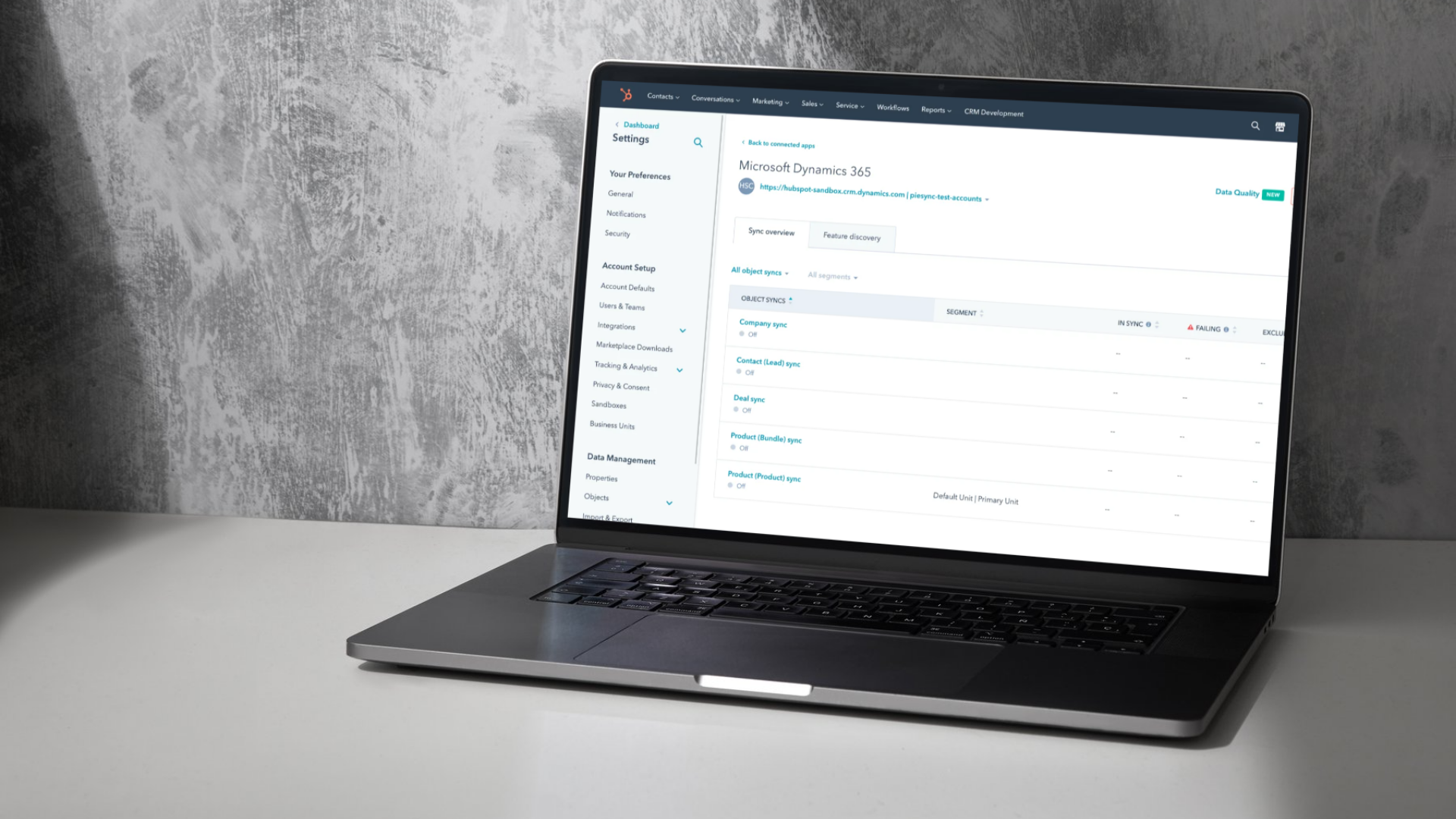
It is not uncommon for the answer to be not “one or the other” but “both.” In many cases, a company uses Odoo for its inventory management and accounting (ERP), while entrusting its customer management to HubSpot (CRM).
Thanks to the robustness of modern APIs, CRM and ERP integrations are now smoother than ever. Since version 18 of Odoo, connectivity is functional regardless of the hosting mode:
- Odoo Online : The standard SaaS model, managed by the publisher.
- Odoo.sh : The PaaS platform that allows you to add custom code.
- On-Premise : Local hosting, often used for versions Community.
The objective of this integration is simple: to allow your sales team to work in an optimized environment (HubSpot) while automatically sending order data to the production or billing system (Odoo).
Conclusion: A question of business vision
The choice between HubSpot and Odoo depends on your immediate priority. If you need to structure your internal operations and production above all, Odoo is a serious candidate. If revenue growth, customer acquisition, and sales pipeline efficiency are your priority, HubSpot is the most profitable investment.
Regardless of the platform, success lies in prior CRM analysis. Technology without processes is just an added cost. At Lakhos, we help businesses transform these tools into sustainable performance drivers.
Frequently Asked Questions (FAQ)
How much can a CRM or ERP implementation project cost?
The cost of a project varies considerably depending on the complexity of your processes and the level of customization required. In the case of HubSpot, investments generally include licenses as well as strategic support for configuration and optimization. For Odoo, it is necessary to plan a larger budget related to custom development, hosting and licenses per user. An initial analysis with an expert allows you to establish a realistic budget aligned with your return on investment.
What are the steps to assess the feasibility of an integration between HubSpot and Odoo?
The first step is to map your processes in order to identify the data to be synchronized (contacts, transactions, products, etc.). Then, a technical analysis of the APIs and the mode of hosting Odoo makes it possible to determine if an existing connector is sufficient or if a custom integration is necessary.
What are the standard integration scenarios?
The most common scenario is based on the synchronization of opportunities (“deals”). When a sale is completed in HubSpot, an order or an invoice is automatically created in Odoo. It is also common to set up a two-way synchronization of contacts in order to ensure data consistency between marketing, sales and customer service teams.