
Can we still do effective marketing without CRM in 2026?



Can we still do effective marketing without CRM in 2026?
If in 2026 your brand is still communicating without structure, segmentation or a clear vision of its contacts, there is a good chance that it will go unnoticed.
Today, consumers are exposed to dozens, sometimes hundreds, of messages per day. Being creative is no longer enough. Not to be visible either. What makes the difference is the ability to organize, repeat, and deliver the right messages, on the right channels, at the right time.
Creativity is essential, but it needs a framework
In marketing, creativity is still the driving force. A brand without personality, vision or values and a strong message will not last long, no matter what tools it uses.
But in 2026, creativity must be structured, planned and amplified at its best in order to maximize the views and interests of the target clientele.
Modern marketing is no longer a series of one-off actions: a post here, a newsletter when you think about it, a campaign “because you have to be present”.
It's an ecosystem. And without a system to organize it, even the best ideas get lost.
The HubSpot Marketing Hub: the perfect example of a CRM that is transforming marketing
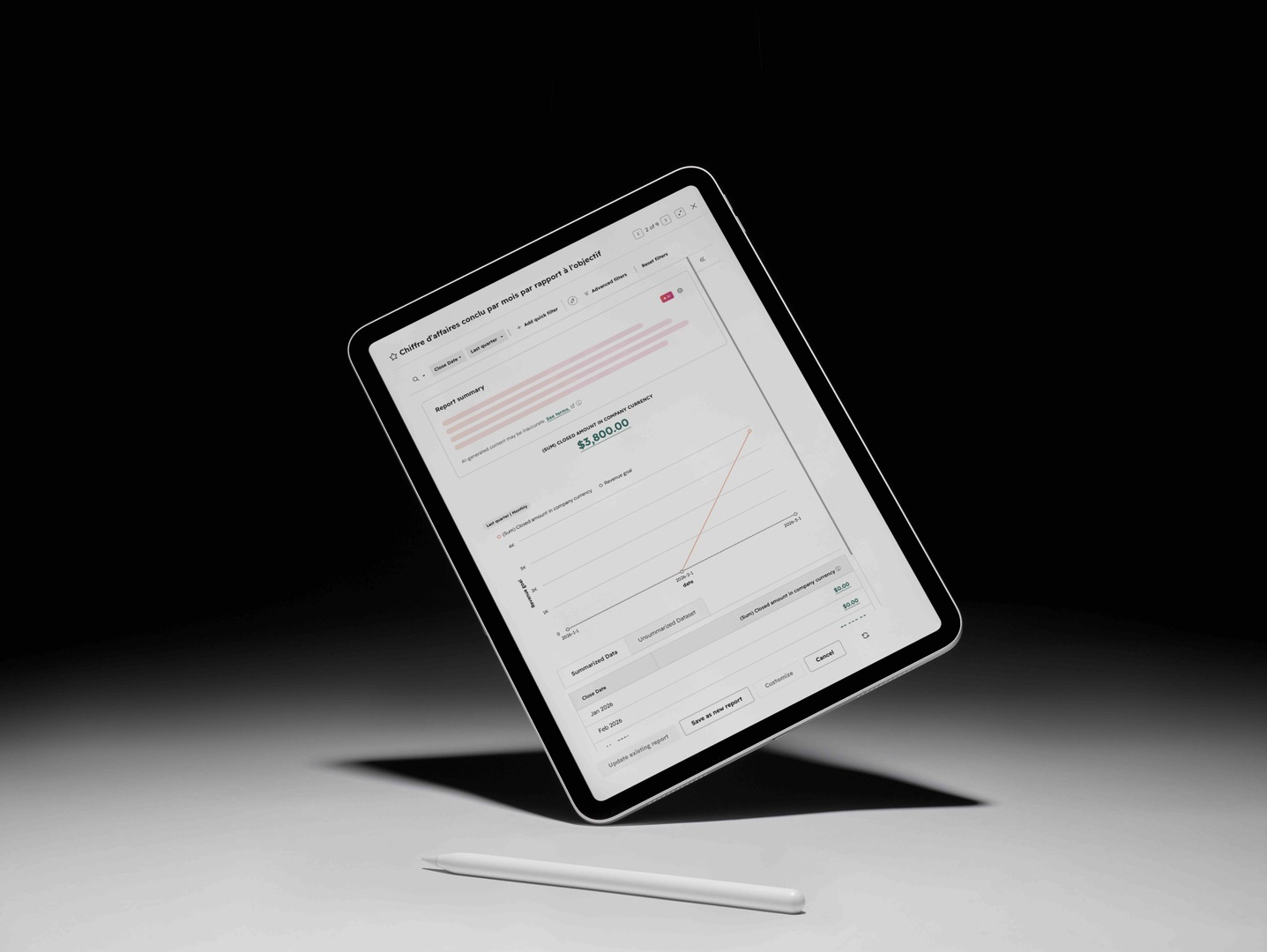
Talking about CRM in 2026 without talking about HubSpot would be a bit unrealistic. Not because it is “the best tool for everyone”, but because it illustrates very well what marketing has become: a system to be orchestrated, not a series of isolated tricks. What sets the Marketing Hub apart from HubSpot is not the multiplication of features. It is the fact that everything is designed around the same central point: contact.
Each interaction, an opening of a newsletter, a click, a click, a visit to a page, a completed form, feeds a unique profile. The result: we no longer work with intuitions, but with a clear reading of the real behavior of audiences. And that's where marketing changes levels. Instead of creating campaigns “for everyone”, the Marketing Hub allows you to build simple but effective scenarios:
- a monthly newsletter sent only to a specific segment,
- content triggered after a concrete action,
- a different message depending on the maturity level of the contact.
No need to reinvent the wheel every time you send. The system works in the background.
Another point that is often underestimated: consistency. When emails, forms, landing pages, and even social posts are managed in the same place, the discourse becomes clearer. Messages are answered. The brand is gaining consistency and therefore credibility.
In 2026, this consistency is crucial. Consumers don't remember a brand because they've seen it once, but because they recognize it. Same tone, same visual references, same communication logic. The Marketing Hub facilitates precisely that famous intelligent pounding that is being talked about more and more.
Finally, there is the question of measurement. No not “” Vanity Metrics ”, but real performance. Know what content generates engagement, which feeds the relationship, and which actually leads to a conversion. Without this visibility, marketing quickly becomes an expensive and unclear exercise. HubSpot isn't magic. But it embodies a marketing reality in 2026: without a tool that can intelligently structure, segment, and automate, even the best ideas run out of steam.
Understand the risks of marketing without CRM
To answer the question: Can we still do effective marketing without CRM in 2026? Yes, technically.
But at the cost of:
- a lot of lost opportunities,
- inconsistencies in communication,
- poorly measured efforts,
- and a brand that is struggling to take root in the minds of consumers.
In 2026, effective marketing does not oppose creativity and technology.
It lines them up. The brands that win aren't the ones that shout the loudest, but the ones that know what to say, to whom, when, and how, repeatedly, consistently, and intentionally.
And today, doing this without CRM is less of a strategic choice than a risky bet.
In 2026, we mostly talk about hammering
The word may sound strong, but it is central.
In 2026, brands that perform are those that accept a simple reality: consumers are overwhelmed with ads and quickly forget.
Hammering a logo, design, or brand signature doesn't mean mindlessly repeating. That means:
- create clear visual references,
- repeat the key messages in different forms,
- maintain graphic and narrative coherence across all channels.
Without repetition, there is no memorization.
Without memorization, there is no strong brand.
CRM, combined with dissemination and planning tools, allows just this hammering without chaos.
Conclusion
In 2026, the challenge is no longer to produce more content, but to keep up. Keep in people's minds. To live in an ecosystem where attention is rapidly fragmented and where oblivion is immediate.
Successful brands are those that have understood that performance does not come from improvisation, but from controlled repetition, coherence and a real reading of their audiences.
A CRM, and the tools that revolve around it, do not do marketing for teams. They empower them to be consistent, clear, and intentional.
In 2026, there is no shortage of creative marketing. It is the ability to make it live, for a long time, without being lost.

.jpeg)