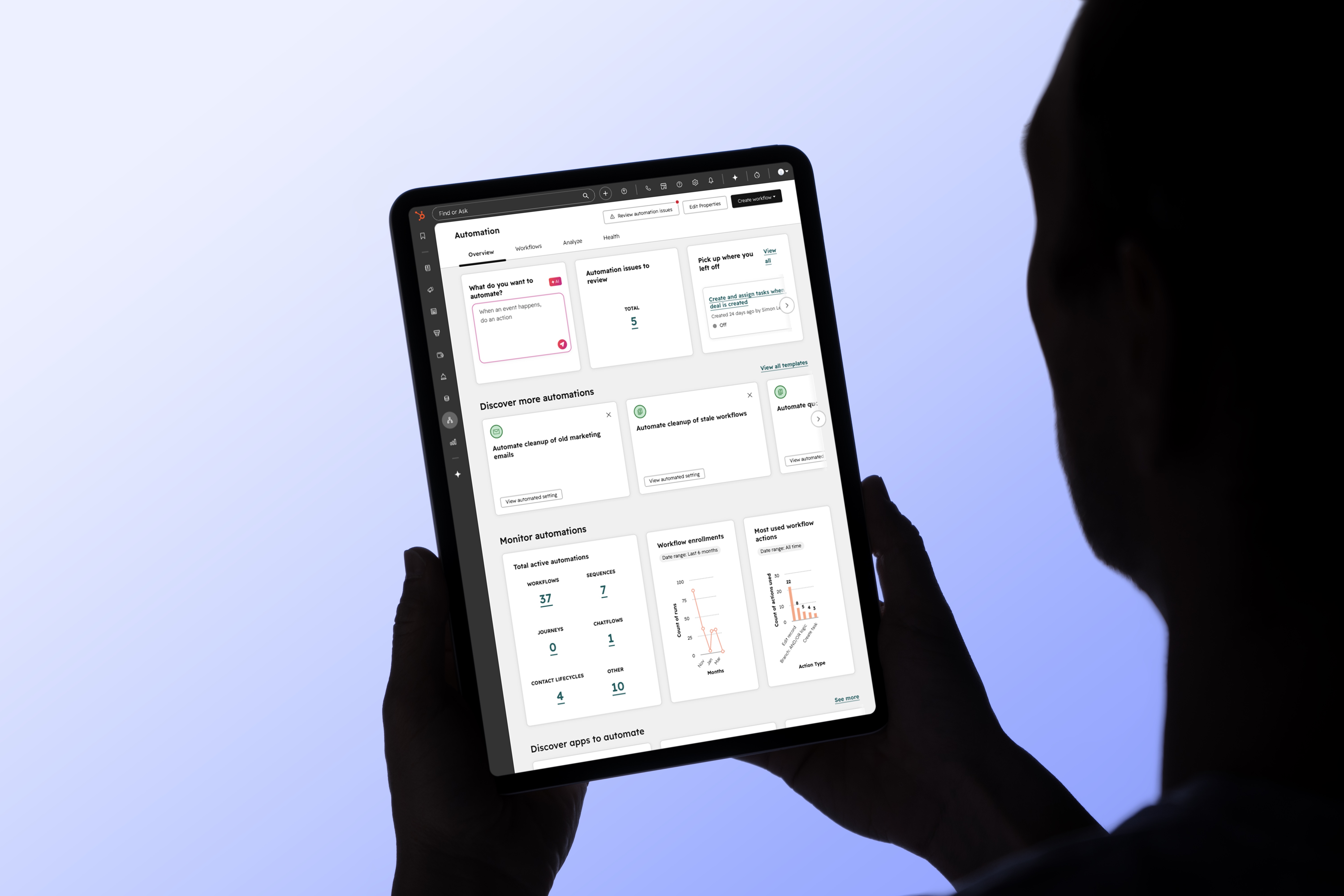
Using HubSpot CRM even if I'm in the Microsoft environment?

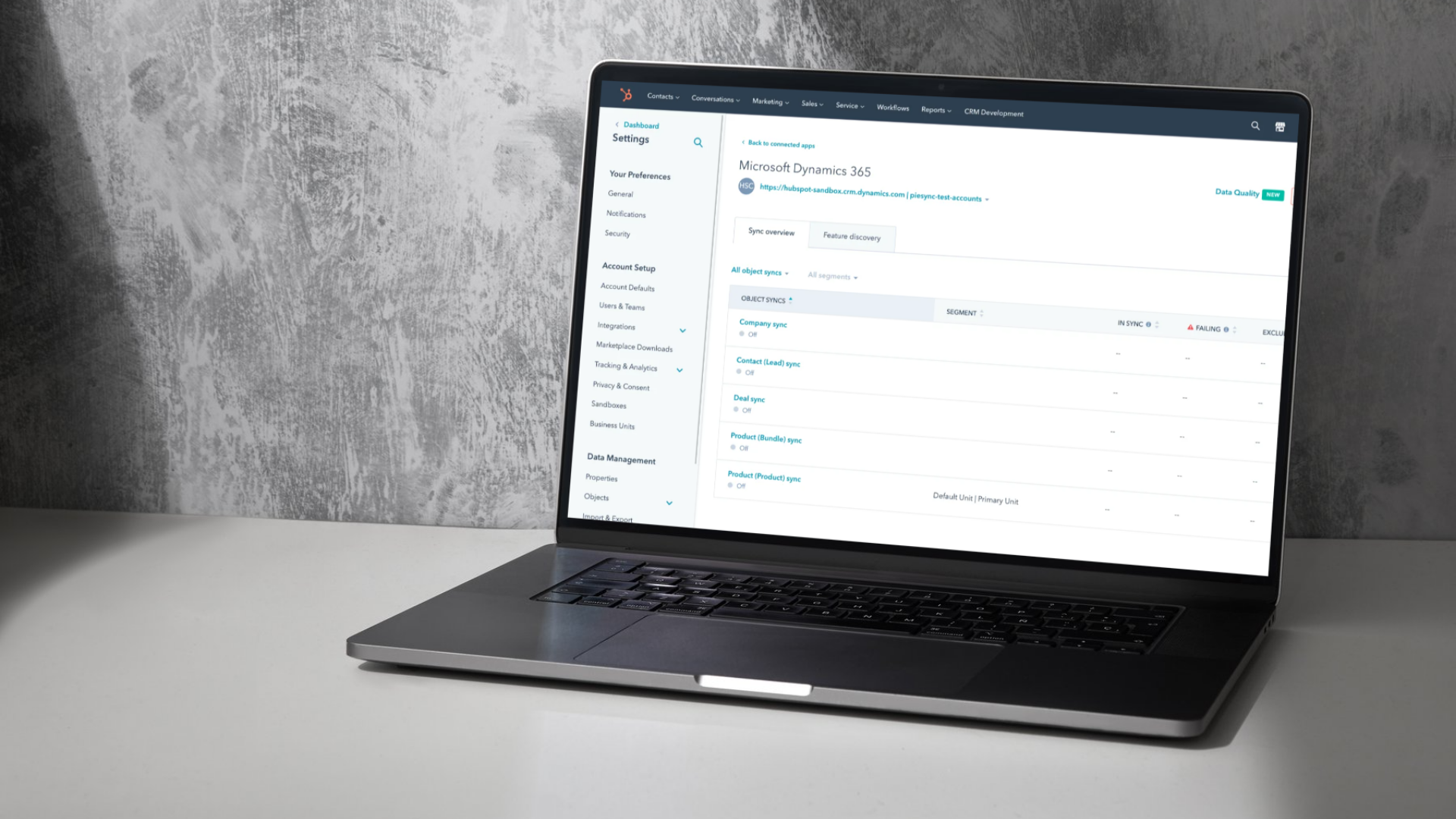

Can we implement HubSpot even if our environment is already Microsoft-based?
This is a question we hear very often in the manufacturing, industrial, and even service industries:
"We're already on Microsoft. Does it still make sense to evaluate HubSpot as a CRM? "
And the short answer is yes. Absolutely.
But first and foremost, let's be transparent: the initial reflex to want to stay within the Microsoft ecosystem is completely logical. If your company already uses Microsoft 365, Teams, Power BI, or an ERP like Microsoft Dynamics 365 Business Central, it's normal to think that Microsoft Dynamics 365 Sales is automatically the most coherent choice for CRM.
And honestly, in many contexts, it can be an excellent decision.
At Lakhos, our role is not to disparage one platform to promote another. We support manufacturing and industrial companies across Canada and the United States with their CRM, RevOps, and ERP integration projects. And what we observe in the field is that both platforms are excellent.
The real question is therefore not:
"Which platform is the most powerful?"
Because both are.
The real question is rather:
"Which platform will actually be adopted by my teams and support my daily growth?"
Microsoft Dynamics Sales and HubSpot: two excellent platforms
Let's start by clarifying something.
Microsoft Dynamics 365 Sales is an excellent CRM:
- very powerful;
- highly customizable;
- extremely robust;
- well-suited for complex environments.
The same goes for HubSpot.
HubSpot is now an extremely comprehensive RevOps platform for managing:
- sales;
- marketing;
- customer service;
- operations;
- automation;
- content;
- and ERP integrations.
So when comparing the two platforms, the debate is generally not about technological power.
The big difference: user experience and adoption
The biggest differentiator we see in the field, particularly among sales teams, is user experience.
And that's much more important than we think in a CRM project.
Because an ultra-powerful CRM that is rarely used quickly becomes a problem.
What we often hear from teams using HubSpot:
- "It's intuitive"
- "It's fast"
- "Information is easy to find"
- "Sales reps genuinely enjoy working in it"
- "The mobile app is excellent"
- "We don't spend our time looking for where to click"
And honestly, this point comes up constantly.
Sales representatives want a fast, fluid, and easy-to-use platform. They want to be able to:
- take notes quickly;
- easily find a client;
- move an opportunity forward;
- send a follow-up;
- view the history;
- or work on mobile without friction.
You could almost say that sales teams have a more "creative" side to their work: they like things to move fast, to be intuitive, and for technology to help them instead of slowing down their momentum.
And that's often where HubSpot really shines.
That doesn't mean HubSpot is "simple" in the narrow sense of the word. On the contrary: it's a very powerful platform with a huge number of features. You need proper support, thorough team training, and a well-structured CRM implementation.
But with the feedback we receive from manufacturing, industrial, and service companies, HubSpot is generally much better adopted internally thanks to its more intuitive and user-friendly nature.
And in a CRM project, adoption changes everything.
"If I'm already on Microsoft, the integration will automatically be simpler."
This is probably the most common misconception.
And yet, in practice, it's not as automatic as one might think.
Let's take the example of a company that already uses Microsoft Dynamics 365 Business Central as its ERP and wants to add Microsoft Dynamics 365 Sales as its CRM.
Yes, both are part of the same Microsoft ecosystem.
But they are still two distinct modules.
You still need to:
- configure the synchronizations;
- build the workflows;
- connect the data;
- define the business rules;
- manage information flows;
- and structure the integrations between systems.
So ultimately, the integration effort between:
- Business Central + Dynamics Sales;
- or Business Central + HubSpot;
… is not as different as many people think.
This is an extremely important point to consider when making technology decisions.
At Lakhos, a large part of our expertise lies precisely in connecting HubSpot to various manufacturing ERPs and operational systems to create a coherent and high-performing technological environment.
HubSpot's marketing advantage is significant
Another crucial aspect: the entire marketing component.
And to be frank, HubSpot has an incredibly strong advantage here.
It's important to remember that HubSpot originally started as a marketing automation platform before evolving into a comprehensive Revenue Operations (RevOps) platform.
While the CRM is now the platform's core, the entire surrounding marketing ecosystem is exceptionally mature.
Featuring:
- Marketing Hub;
- Content Hub;
- automated campaigns;
- nurturing;
- customer re-engagement;
- behavioral tracking;
- forms;
- landing pages;
- automated workflows;
- content tools;
- and sales-marketing alignment within a single database.
Today, manufacturing and industrial companies need to invest more in their marketing:
- market diversification;
- increased competition;
- sales pressure;
- customer experience;
- retention;
- re-engagement.
And having sales, marketing, and operations aligned on a single platform becomes a huge strategic advantage.
It's particularly powerful when CRM data, marketing activities, and ERP data are connected together in a RevOps approach.
Ultimately, should you choose HubSpot or Dynamics Sales?
The honest answer: it depends on the context.
Microsoft Dynamics 365 Sales is an excellent platform.
HubSpot is also an excellent platform.
Both can work very well in a manufacturing or industrial environment.
But in our opinion, it would be a mistake not to evaluate HubSpot simply because your company already uses Microsoft.
Today, successful companies build connected technological ecosystems. They choose the best platforms for their real needs, their teams, and their growth objectives.
And often, the elements that truly make a difference are:
- team adoption;
- ease of use;
- speed of execution;
- ERP integration capability;
- sales-marketing-operations alignment;
- and the ability to support a modern RevOps approach.
Want to see a practical example of how HubSpot can integrate with Business Central?
At Lakhos, we support manufacturing and industrial companies with their projects:
- CRM implementation;
- ERP integration;
- RevOps transformation;
- and business process optimization.
We can demonstrate to you in practice:
- how HubSpot can integrate with Microsoft Dynamics 365 Business Central;
- what data can be synchronized;
- how to align sales, marketing, and operations;
- and how to build a platform truly adopted by your teams.