
Is a CRM relevant for a small organization?


Is a CRM relevant for a small organization?
What is a CRM, exactly?
A CRM (Customer Relationship Management) is above all a centralized database that brings together all your customer and prospect information. But today, it's no longer just an improved address book.
Modern CRMs, like HubSpot CRM, offer much more:
- sales and opportunities management,
- marketing automation,
- customer service follow-up,
- task reminders,
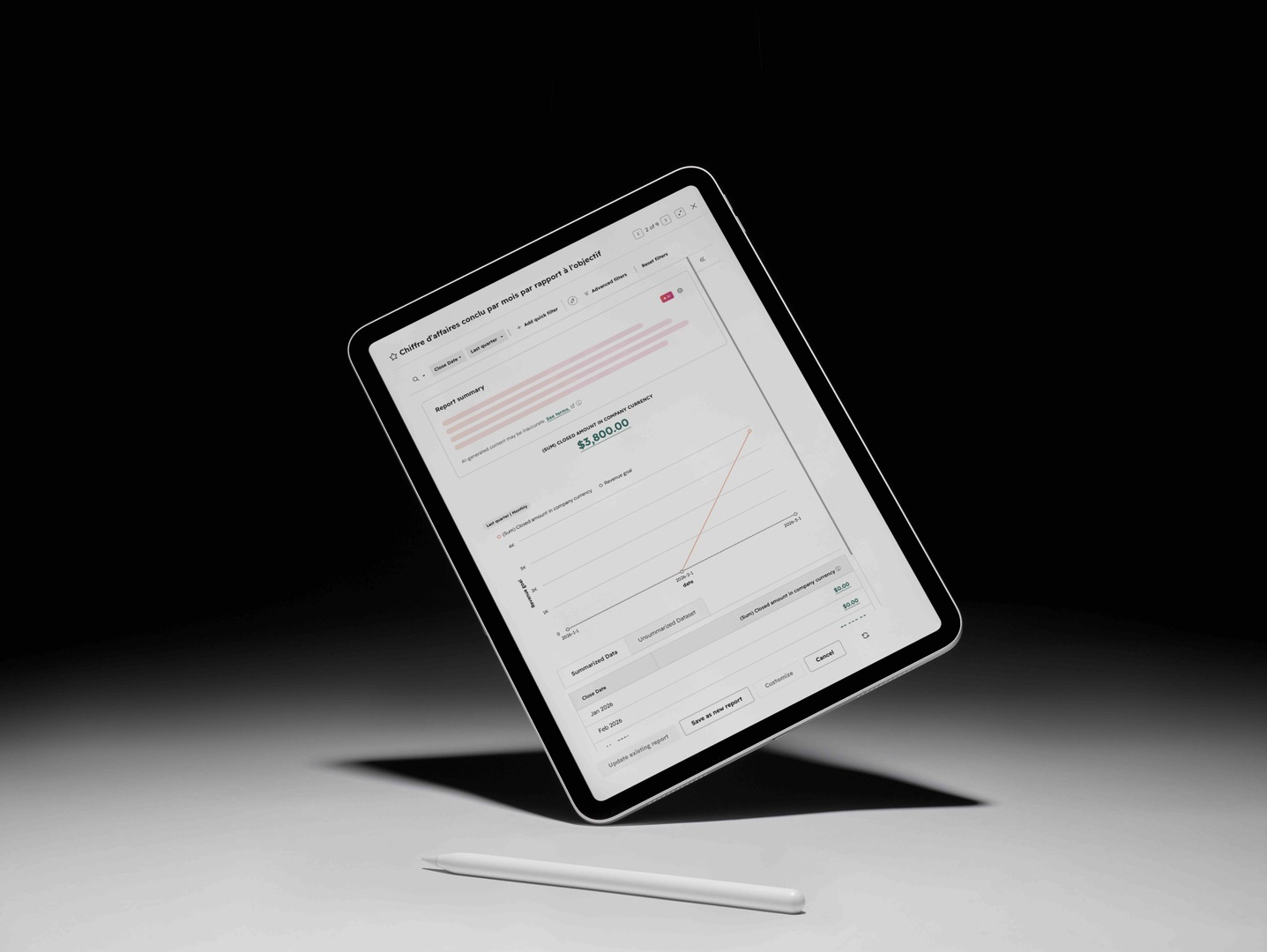
- reports and dashboards to measure your performance.
In summary, a CRM helps your team better manage their daily business relationships, stay organized, and focus on what matters: your customers.
Why is a CRM useful even for a small team?
You might think that a CRM is reserved for large companies with a large sales force. However, it is often in small organizations that the impact is most visible.
For a large company, CRM is obvious, and has already been in place for a long time. But for a small business, the return on investment is almost immediate:
- you capitalize on your data,
- you gain in efficiency in the face of your competitors,
- you are structuring your sales pipeline,
- and you keep an overview of all your interactions.
No more scattered Excel files or forgotten notes: with a CRM, everything is grouped into a single tool, accessible to your entire team, at all times.
HubSpot CRM: a solution adapted to small, medium and large organizations
Whether you are a small organization, an SME with 200 employees, or even a self-employed person, HubSpot CRM is distinguished by:
- its intuitive and customizable interface,
- a free and scalable version,
- a quick start, without the necessary technical expertise.
It's a CRM that grows with you. You can start simple and then deploy more advanced features as your needs change.
Gain efficiency with automation
In a small team, time is a scarce resource. A CRM like HubSpot automates repetitive tasks:
- automatic email tracking,
- reminders to follow up with a prospect,
- scheduled follow-up sequences.
These automations allow your representatives to focus on high value-added tasks, such as prospecting or customer relations, rather than wasting time on administrative management.
Preparing for growth through integrations
Another key advantage of HubSpot CRM is its integrations. The platform can connect to your accounting software, marketing tools, and even operational or ERP systems.
From the start, you set up a clear data architecture that gives you better visibility and facilitates decision-making. In other words, you are already preparing the ground to support the future growth of your organization.
Start simple, evolve gradually
Adopting a CRM doesn't mean investing thousands of dollars from day one. You can start in a simple way: build a clean, well-structured database, then adjust the features as your needs change. This gradual approach ensures smooth adoption and avoids the pitfalls associated with too rapid implementation.
In conclusion
A CRM is not just for big businesses. It is a relevant and accessible tool, even for a small organization. By centralizing your data, structuring your processes and automating your follow-ups, you gain efficiency now while preparing for tomorrow's growth.
Whether you are a small organization, an SME with 200 employees, or even a self-employed person, HubSpot CRM is distinguished by:
- its intuitive and customizable interface,
- a free and scalable version,
- a quick start, without the necessary technical expertise.
It's a CRM that grows with you. You can start simple and then deploy more advanced features as your needs change.
.jpeg)