
The role of RevOps in data management for manufacturing companies

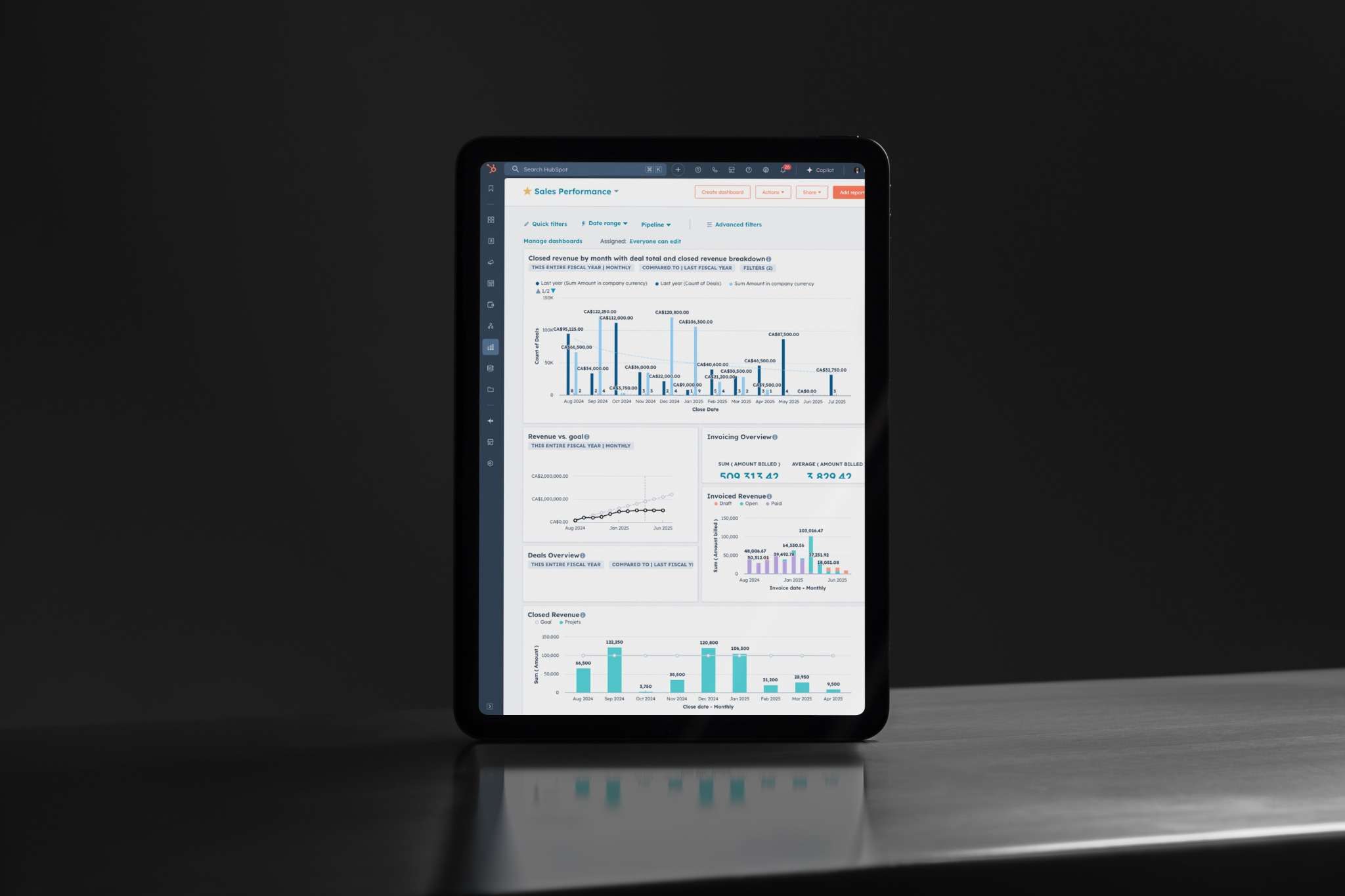

The role of RevOps in data management for manufacturing companies
What is RevOps and why is it essential?
RevOps (Revenue Operations) is an approach that involves aligning revenue generating departments: marketing, sales, customer service with product and operations teams, with a common goal: to generate more revenue.
In the North American manufacturing sector, this approach is becoming essential. The reality is simple: working as a team seems obvious, but in reality, silos, poorly defined processes, and a lack of data visibility make it difficult to collaborate.
Without common goals or shared information, each department moves forward in its own way, and the company loses efficiency.
The power of data at the heart of RevOps
The value of RevOps is based on one thing: data.
Accessing and centralizing the right data allows manufacturers to:
- be proactive in their sales and prospecting;
- personalize their communications;
- increase their volume of opportunities or improve their closing rate;
- improve sales forecasts taking into account operational capabilities;
- offer a better customer experience, from the first contact to the after-sales service.
Let's take a concrete example: if your marketing teams detect an increase in demand for a specific product, sales can adjust their discourse and operational staff can anticipate production. The result: a smoother cycle, less friction, and a satisfied customer.
Simplifying processes, not reinventing them
We often believe that you have to completely reinvent your sales processes to adapt. The reality? Not necessarily.
RevOps does not aim to change everything, but rather to:
- clarifying existing processes;
- standardize practices;
- eliminate unnecessary complexity;
- capitalize on your existing technological tools.
In other words: simplify what can be simplified, focus on your message, your added value and your innovation (R&D). For the rest, let technology support you.
CRM: the foundation of RevOps in manufacturing
At the center of any RevOps strategy is a key element: CRM.
- CRM centralizes your customer and prospect data.
- It offers a complete view of the customer journey, from prospecting to after-sales service.
- It integrates naturally with your other systems, especially ERP, which remains at the heart of your manufacturing operations.
This CRM + ERP integration allows for a single, up-to-date and actionable database, which is essential for aligning departments and making decisions based on facts, not on hunches.
Conclusion
RevOps is not a trend, it is a necessity for manufacturing companies that want to grow in a competitive market.
By breaking silos, simplifying your processes and making full use of your data via a CRM integrated into your ERP, you:
- align your teams with common goals;
- make better decisions;
- improve the customer experience;
- and maximize your income.
The message is clear: to move forward, manufacturers must move from “every man for himself” mode to a ReVops strategy where data and collaboration become their best growth driver.
Frequently Asked Questions (FAQ)
What is the difference between a CRM and an ERP?
A CRM (Customer Relationship Management) centralizes customer data, sales follow-ups, opportunities and after-sales service. Instead, an ERP (Enterprise Resource Planning) manages internal operations: production, inventories, finances, procurement. Together, CRM and ERP are complementary: CRM aligns teams with the customer relationship, while ERP supports operational execution.
How to start a ReVops approach in a manufacturing company?
Start by mapping your sales, marketing, and service processes to identify silos and friction points. Then, centralize your data in a CRM and then integrate it with your existing systems (like ERP). The aim is to create a continuous flow of information between departments to facilitate collaboration.
What are the concrete benefits of RevOps for a manufacturer?
RevOps allows you to:
- better predict demand and align production,
- improve the closing rate thanks to reliable data
- personalize customer interactions
- reduce time lost due to duplicates and poor communication
- provide a smoother customer experience from start to finish
.jpeg)