
How is the ROI of a CRM project calculated?


We are often asked the question: “How much does a CRM cost? ”. The software license, yes. But also: how much does it cost to implement the system correctly.
Very quickly, the discussion diverted to:
“It's too expensive.”
Or
“What is the return on investment of this CRM? ”
In the manufacturing industry, we are very good at calculating ROI.
A $450,000 metal stamping machine, which runs 18 hours a day, capable of producing 80 pieces per minute — the math is over very clearly based on the cost of production and the margin per piece.
But a CRM is not a machine.
A CRM is not an automated machine
A CRM is a tool used by humans.
Yes, there is automation.
Yes, there are AI agents.
But it does not replace humans.
And above all:
A CRM that is misused, misconfigured or poorly adopted will never give a good ROI.
Unlike an automated machine, CRM depends on:
- Processes
- Teams
- Leadership
- and the quality of the location
This is especially true in a manufacturing company with 75 to 150 employees, where the sales team, customer service, and sometimes even operations have to work with the same data.
CRM ROI starts with revenue
Before even talking about the ROI of CRM as a tool, we need to talk about the operational ROI of revenue.
For a CRM to generate a return on investment, you must:
- Opportunities that are coming in
- consistency in sales
- the development of new markets
- Repeat business
- a structured customer relationship
CRM is not the only component, but it is a central component of RevOps:
- Process
- teams
- technology (CRM, CRM and ERP integrations, automation)
How to concretely calculate the ROI of a CRM
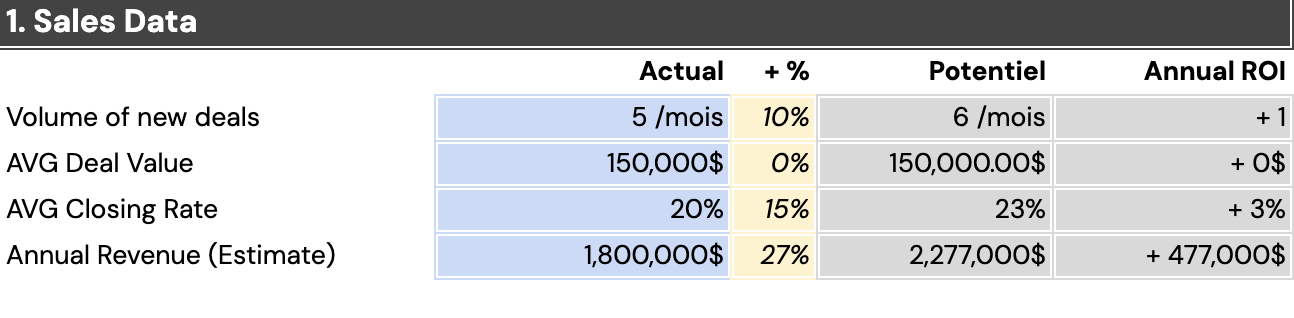
At Lakhos, a HubSpot agency and partner in Montreal, we have built a realistic CRM ROI calculator, based on what we see in the field, especially with B2B manufacturers.
Here are the basic variables:
- the volume of new opportunities created
- The average value of opportunities
- The average closing rate
- The annual income generated
And yes, if you already have this data.
Many companies do not yet have them, CRM is just used to obtain them.
From there, a conservative percentage of growth is applied, based on improving processes and visibility.
Concrete example (B2B manufacturer)
Let's take a manufacturing company with around 100 employees, with a sales team of 5 to 6 people.
- 10 new opportunities per month
- Average value: $30,000
- Current closing rate: 20%
Without generating a single additional opportunity, simply by improving monitoring:
- automated reminders
- visibility on submissions
- no opportunity left without interaction
We can reasonably improve the relative closing rate by 15%, i.e.:
- 20% to 23%
Result:
+$108,000 per year, only by optimizing the closing rate.
And that's a very conservative approach.
You can then:
- increase the number of opportunities
- Increase the average value
- or combine the two
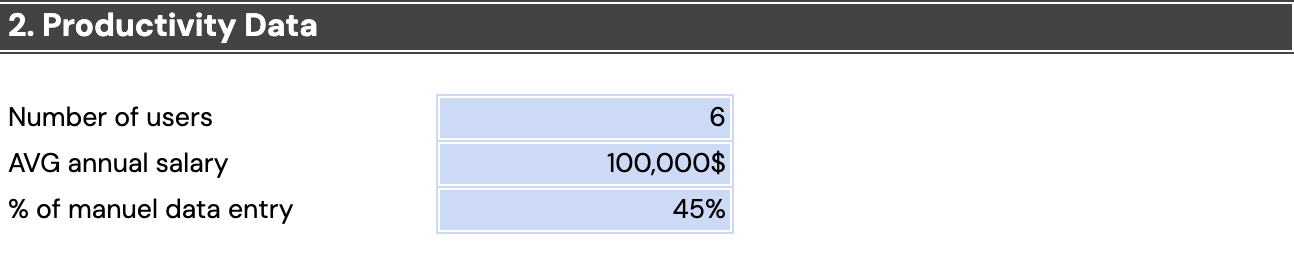
Now let's add productivity.
In an organization without a CRM or with a poorly configured CRM:
- 4 to 7 hours per week
- per representative
- in manual data entry and management
In our example:
- 6 CRM users
- Average salary: $100,000
- around 25% of the time spent on manual management
A well-established CRM makes it possible to drastically reduce this time, thanks to:
- automation
- CRM and ERP integrations
- elimination of double entries.
The real cost of a CRM
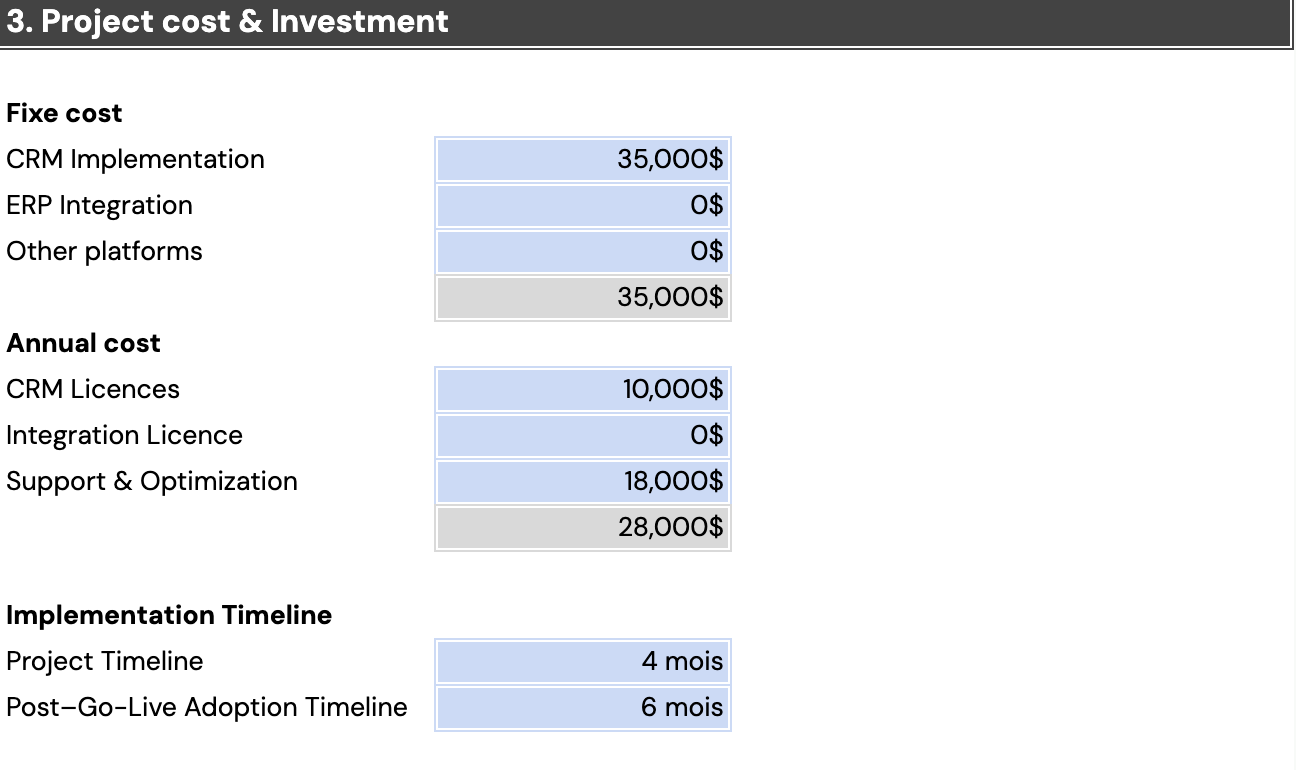
To calculate the real ROI, you need to include:
- CRM licenses (e.g. HubSpot CRM)
- Cost of the CRM implementation project
- ERP integrations and other systems
- support and continuous optimization
- adoption deadlines
When you put everything on the table:
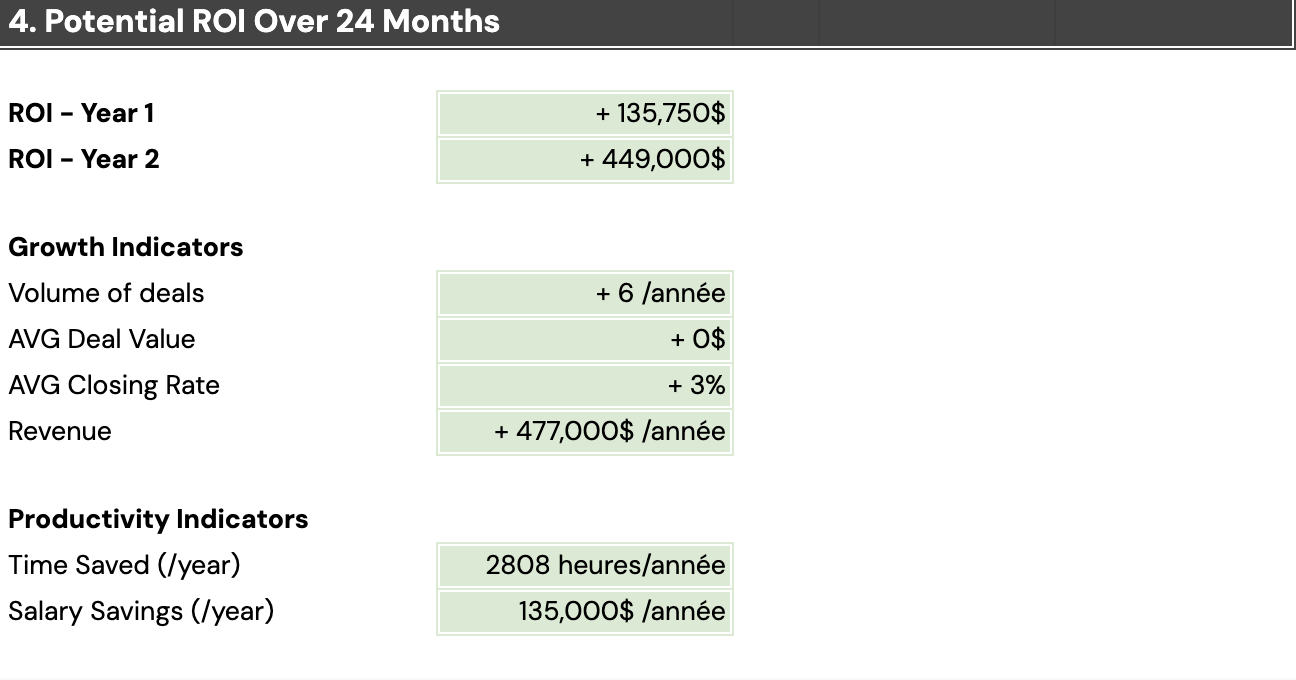
- ROI Year 1: +$135,750
- ROI Year 2: +$449,000
Without even increasing initial growth further.
CRM must be adopted, not put up with
Does a CRM work like an automated machine?
No
But:
- if it is set up correctly
- if it is simple to use
- whether the data entry is minimal and useful
- If teams see concrete value
So the ROI is real, measurable and sustainable. It starts with leadership. It happens with the right processes.
And it succeeds with The right HubSpot partners who believe in the project as much as you do.
Frequently Asked Questions (FAQ)
How long before seeing an ROI after a CRM implementation?
Generally, the first gains are visible between 3 and 6 months, especially on monitoring opportunities and team productivity. The full ROI is often consolidated from the Second grade, once the adoption is in place.
Is the CRM ROI realistic for a manufacturing SME?
Yes Even for a manufacturing company of 50 to 100 employees, the gains in visibility, in closing rates and in time saved largely justify the investment, especially in B2B.
Is CRM alone enough to generate ROI?
No CRM is a Lever, not a magic solution. The ROI depends on the combination:
- clear sales processes
- adoption by the sales team
- CRM and ERP integrations
- continuous improvement (RevOps)
.jpeg)