
Why implement a CRM like HubSpot in an industrial company?

.jpg)

Why implement a CRM like HubSpot in an industrial or manufacturing organization
At Lakhos, a HubSpot integration firm based in Montreal, we have been supporting industrial and manufacturing companies in their CRM implementation projects for several years. And if there is one thing we observe in the field, it is that CRM is rarely just another tool: well established, it becomes a structuring lever for sales, operations and the customer experience.
The fundamental role of a CRM
At its core, the objective of a CRM is simple: to unify and structure customer data.
We replace static, fragmented and difficult to maintain Excel files with a centralized, dynamic and scalable system.
A modern CRM makes it possible to group together:
- The contacts
- Businesses
- active transactions
- The history of exchanges
- the follow-ups and activities of the representatives
But above all, it allows you to take action on this data.
What is the concrete purpose of a CRM for sales teams?
A CRM like HubSpot allows sales teams to be more effective, more proactive, and better aligned with other departments.
The main objectives that we observe with our customers are:
- Increase sales volume
- Increase the average transaction value
- Reduce the sales cycle and improve pipeline velocity
- Accelerate the creation of submissions, even in highly personalized contexts
- Improving the customer experience by moving from a reactive to a proactive posture
In industrial and manufacturing environments, these gains often come from CRM—ERP integrations and better communication between sales and operations.
The key to success: building the foundation before accelerating
Before wanting to automate, measure or predict anything, you have to put the foundations in place:
- A uniform and clean database
- A consistent data architecture
- A sales pipeline that is simple, clear and in line with the reality on the ground
Once these elements are in place, everything becomes easier:
- reliable reports
- relevant automations
- adding HubSpot modules
- Really applicable RevOps logic
Trying to push the machine without a solid foundation almost always leads to frustration.
HubSpot: much more than a CRM
HubSpot isn't just a CRM.
It is a complete platform that brings together marketing, sales and customer service in the same ecosystem.
HubSpot CRM is distinguished by:
- its ease of adoption
- its flexibility
- its functional depth
- its ability to evolve with the company
It is not the only good CRM on the market, but for many industrial organizations, it offers an excellent balance between power and simplicity.
1. Centralize sales data and activities
HubSpot CRM allows you to centralize all sales teams' activities in a single environment.
Each contact has a complete sheet including:
- The history of exchanges
- Calls, emails and meetings
- shared documents
- associated transactions
The sales pipeline provides a clear view of current opportunities, with steps customized to your real process.
The result: less loss of information, more collaboration and a 360° vision of each opportunity.
2. Automate intelligently (without dehumanizing)
HubSpot makes it possible to automate several key tasks:
- lead assignment
- Reminders
- reminders
- Scoring
- email sequences
Beware of hyperautomation. The strength of the representatives lies in personalization, a detailed understanding of the context and the human relationship.
AI and automation are used to:
- speed up research
- Eliminate the repetitive
- structure follow-up
But the human brain is still critical in the details that make a difference. Watch episode 31 of the podcast Experiment X.0: Automate without dehumanizing yourself, to learn more.
3. Encourage collaboration between sales and operations
HubSpot makes collaboration easy:
- between representatives
- between sales, marketing and customer service
- between sales and operations
Scheduling appointments, sharing documents, and internal communications are centralized.
In a manufacturing context, CRM—ERP integrations are becoming crucial to align quotes, production, deadlines and invoicing.
HubSpot CRM integrates easily with multiple operational systems, allowing for a smooth flow of information.
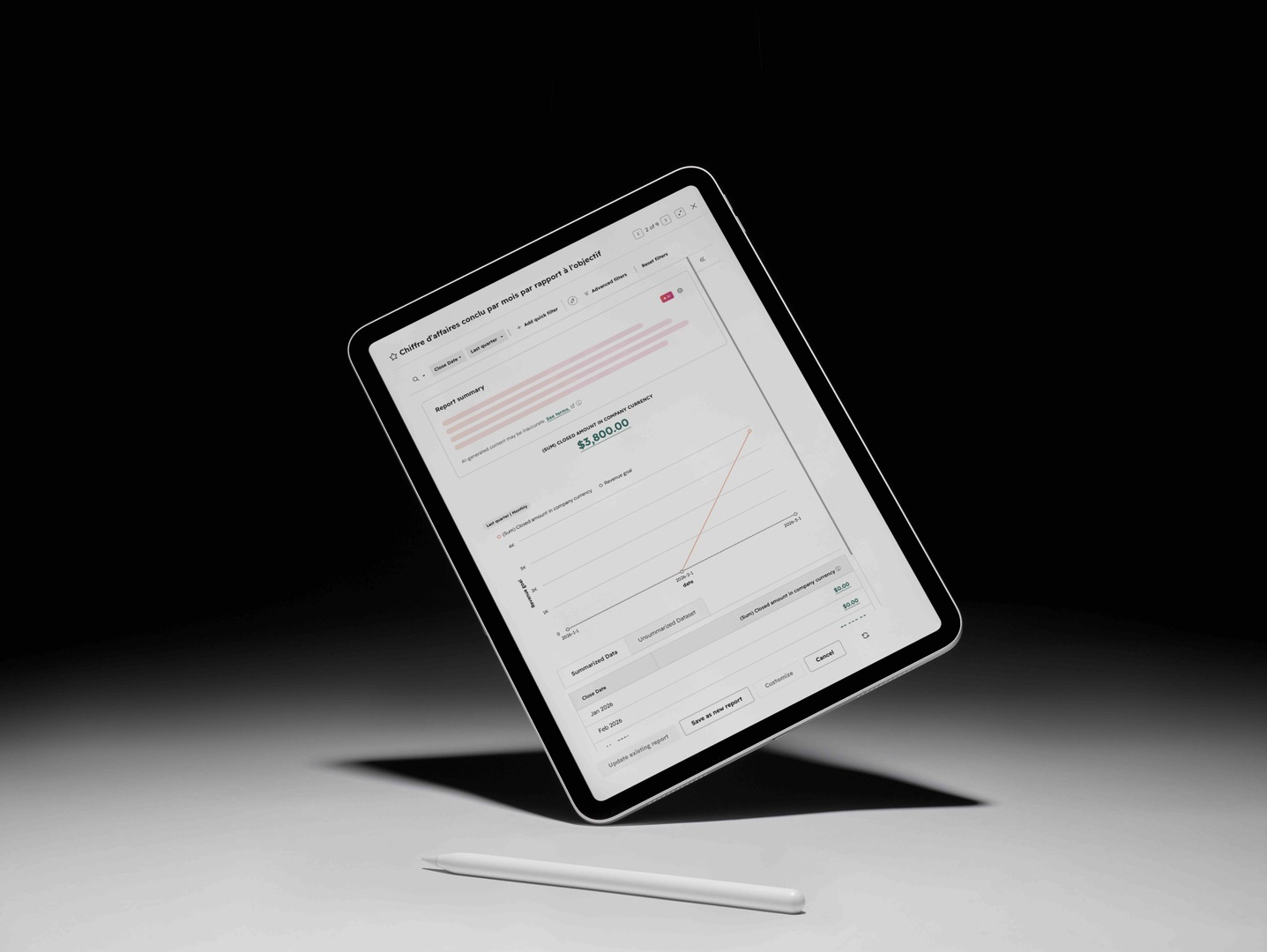
4. Manage performance with reliable reports
HubSpot's reporting tools allow you to track:
- Conversion rates
- Pipeline velocity
- The length of the sales cycle
- Revenues per representative or per segment
The dashboards are customizable and updated in real time.
With reliable data, decisions become faster, more objective and more in line with reality on the ground.
5. Do more with HubSpot Sales Hub
Sales Hub adds advanced features:
- playbooks to structure calls and meetings
- creating quotes directly in HubSpot
- tracking submissions in real time
- integrated calls and chat
These tools allow sales teams to become more consistent, professional, and efficient.
6. Optimize and evolve your sales pipeline
HubSpot allows you to adapt the pipeline to your real process, not the other way around. The step-by-step indicators allow you to quickly identify:
- The blockages
- The losses
- The opportunities to prioritize
This structured approach contributes to:
- shorten sales cycles
- improve conversion rates
- maximizing transaction value
Conclusion
A CRM like HubSpot, well-established and well-structured, is becoming a real growth engine. For industrial and manufacturing businesses, it makes it possible to align sales, operations, and customer experience around the same source of truth.
At Lakhos, as a HubSpot agency and integrator partner, our role is to transform HubSpot CRM into a truly useful tool, aligned with your processes and capable of supporting your long-term growth.
.jpeg)